Consider the many aspects of the play environment (the materials and equipment, the physical set-up, the rules, our role as an educator). How does the environment contribute to curriculum and learning?
There are many different aspects of a play environment like materials, equipment, set up, rules, and us as early childhood educators. Materials and equipment are a big part of a play environment, there needs to be enough open ended things for children to work with so they do not get bored. Some materials could be toys like blocks, sticks, cars, puzzles, people, and animals. Some could be role play items like dishes, forks, knives, hats, clothes, shoes, purses, pans, and cups. Some other materials could be musical instruments like drums, triangles, piano, and guitars. There should be art supplies readily available like paper, markers, pencils, scissors, glue, tape and anything else the children might need to make their projects. Finally there should be a lot of books, books below, above and at the children’s level in the class.
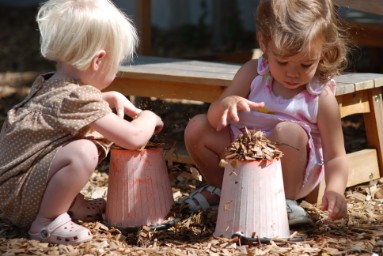 |  The physical set up should be thought out greatly with all the teachers in the room. It is important for the environment in the class that all the centers work together and that the set up is based on the children’s interests. So if the children have been building houses to live in a the block center, the teachers could consider moving the role play and block center closer together so they can dress up and live in their houses. Rules in the class are important to the play environment. The children should know the rules and be able to conform to them and there shouldn’t be too many. The children should be able to make up the rules with the teachers so they know what is wrong and right. Last our role as an educator is an important aspect to the play environment because it is us that set it up based on the children’s wants and needs. The environment contributes to the curriculum and learning by giving children the proper place to be able to play and learn, and gives teachers the opportunity to see what the children are interested and to create curriculum and learning experiences based on what the children are interested in. |
